
 Translate
News
EU Global Gateway Flagship Initiative – EU NaturAfrica Programme: What’s happening in Southern Africa TFCAs
23 March 2026
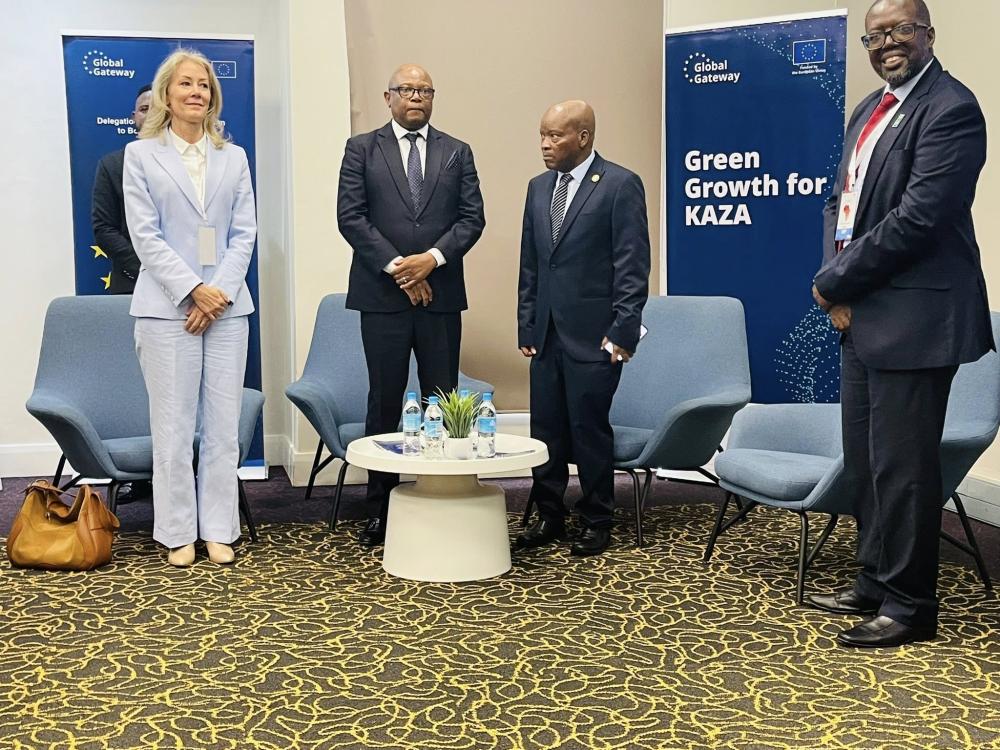
The EU NaturAfrica programme continues to make strides in enhancing biodiversity conservation and community resilience across Southern Africa's Transfrontier Conservation Areas (TFCAs). Here's an overview of where the programme is, who's involved, and what it means for conservation on the ground.
€10 Million Contribution to SADC TFCA Financing Facility: Funding Green Economy Activities
A major contract has been signed with IUCN, channelling €10 million into the SADC Transfrontier Conservation Area Financing Facility. This money will go directly to practical green economy work, for example:
• Sustainable agriculture that protects biodiversity
• Renewable energy projects in conservation areas
• Ecotourism development that benefits local communities
The goal is straightforward: support conservation activities that are both environmentally sound and economically viable for communities living in and around TFCAs.
TFCA-by-TFCA: What's Being Done and Where
Here's what's underway:
Great Limpopo TFCA: Linking People and Landscapes
In the Great Limpopo Transfrontier Conservation Area (GLTFCA), spanning Mozambique, Zimbabwe, and South Africa, the EU has signed one grant with Peace Parks Foundation and Frankfurt Zoological Society. This initiative targets enhanced conservation outcomes, promoting human-wildlife coexistence and securing livelihoods by encouraging climate-smart farming. The collaborative efforts aim to restore fragile ecosystems and establish sustainable practices amidst challenges such as poverty, inequality, and strained infrastructure.
Chimanimani TFCA: Conserving Biodiversity
The EU is working alongside Fauna & Flora International and Birdlife Zimbabwe in the Chimanimani Transfrontier Conservation Area, nestled within Mozambique and Zimbabwe. Illegal logging, poaching, and unsustainable land practices are the core problems. The project is strengthening governance structures through transboundary collaboration – developing a cross-border management plan, building law enforcement capacity, and setting up biomonitoring systems to track conservation progress.
MAZA TFCA: Connecting Livelihoods and Landscapes
The Malawi-Zambia (MAZA) Transfrontier Conservation Area also benefits from EU support, with Peace Parks Foundation and Frankfurt Zoological Society steering the “Connecting Livelihoods and Landscape” project. Addressing chronic underdevelopment, water scarcity, and unsustainable farming practices, the initiative seeks to promote community resilience and biodiversity conservation. By advancing land-use planning and facilitating meaningful community participation, the project aims to enhance conservation-compatible livelihoods and foster resilient governance across borders.
KAZA TFCA: Green Growth and Sustainable Development
One of the world's largest terrestrial conservation areas, KAZA faces the challenge of converting natural capital into lasting socio-economic benefit. The EU, in partnership with KAZA Secretariat, WWF, and Sustainable Finance Coalition, is supporting strategies to turn nature into inclusive growth through ecotourism, biodiversity-friendly enterprises and stronger financing mechanisms for long-term sustainability.
Kgalagadi Transfrontier Park: Integrated Management for Biodiversity Conservation and Community Resilience
The "Integrated Management for Biodiversity Conservation and Community Resilience in the Kgalagadi Transfrontier Park" project, led by African Parks is revitalising this arid conservation area through innovative landscape management, infrastructure improvements, and community-led conservation initiatives - building both ecological and socio-economic resilience.
National Government Alignment
All grant agreements under NaturAfrica were established with the prior knowledge and endorsement of the relevant national governments. This ensures every project aligns with sovereign priorities and national institutional frameworks – an important safeguard for conservation managers working across borders.
The Bigger Picture: One Programme, Many Solutions
What ties these projects together is a shared vision: thriving ecosystems and communities across Southern Africa. Each TFCA project is designed around its specific context, but all share the same goals:
• Reduce human-wildlife conflict
• Improve natural resource governance
• Support community livelihoods that depend on healthy ecosystems
• Strengthen transboundary collaboration
This is the EU's commitment in action – holistic, place-based, and built around lasting conservation outcomes for both people and nature.
For more information: Filipa Corte Real on filipa.corte-real@eeas.europa.eu
A major contract has been signed with IUCN, channelling €10 million into the SADC Transfrontier Conservation Area Financing Facility. This money will go directly to practical green economy work, for example:
• Sustainable agriculture that protects biodiversity
• Renewable energy projects in conservation areas
• Ecotourism development that benefits local communities
The goal is straightforward: support conservation activities that are both environmentally sound and economically viable for communities living in and around TFCAs.
TFCA-by-TFCA: What's Being Done and Where
Here's what's underway:
Great Limpopo TFCA: Linking People and Landscapes
In the Great Limpopo Transfrontier Conservation Area (GLTFCA), spanning Mozambique, Zimbabwe, and South Africa, the EU has signed one grant with Peace Parks Foundation and Frankfurt Zoological Society. This initiative targets enhanced conservation outcomes, promoting human-wildlife coexistence and securing livelihoods by encouraging climate-smart farming. The collaborative efforts aim to restore fragile ecosystems and establish sustainable practices amidst challenges such as poverty, inequality, and strained infrastructure.
Chimanimani TFCA: Conserving Biodiversity
The EU is working alongside Fauna & Flora International and Birdlife Zimbabwe in the Chimanimani Transfrontier Conservation Area, nestled within Mozambique and Zimbabwe. Illegal logging, poaching, and unsustainable land practices are the core problems. The project is strengthening governance structures through transboundary collaboration – developing a cross-border management plan, building law enforcement capacity, and setting up biomonitoring systems to track conservation progress.
MAZA TFCA: Connecting Livelihoods and Landscapes
The Malawi-Zambia (MAZA) Transfrontier Conservation Area also benefits from EU support, with Peace Parks Foundation and Frankfurt Zoological Society steering the “Connecting Livelihoods and Landscape” project. Addressing chronic underdevelopment, water scarcity, and unsustainable farming practices, the initiative seeks to promote community resilience and biodiversity conservation. By advancing land-use planning and facilitating meaningful community participation, the project aims to enhance conservation-compatible livelihoods and foster resilient governance across borders.
KAZA TFCA: Green Growth and Sustainable Development
One of the world's largest terrestrial conservation areas, KAZA faces the challenge of converting natural capital into lasting socio-economic benefit. The EU, in partnership with KAZA Secretariat, WWF, and Sustainable Finance Coalition, is supporting strategies to turn nature into inclusive growth through ecotourism, biodiversity-friendly enterprises and stronger financing mechanisms for long-term sustainability.
Kgalagadi Transfrontier Park: Integrated Management for Biodiversity Conservation and Community Resilience
The "Integrated Management for Biodiversity Conservation and Community Resilience in the Kgalagadi Transfrontier Park" project, led by African Parks is revitalising this arid conservation area through innovative landscape management, infrastructure improvements, and community-led conservation initiatives - building both ecological and socio-economic resilience.
National Government Alignment
All grant agreements under NaturAfrica were established with the prior knowledge and endorsement of the relevant national governments. This ensures every project aligns with sovereign priorities and national institutional frameworks – an important safeguard for conservation managers working across borders.
The Bigger Picture: One Programme, Many Solutions
What ties these projects together is a shared vision: thriving ecosystems and communities across Southern Africa. Each TFCA project is designed around its specific context, but all share the same goals:
• Reduce human-wildlife conflict
• Improve natural resource governance
• Support community livelihoods that depend on healthy ecosystems
• Strengthen transboundary collaboration
This is the EU's commitment in action – holistic, place-based, and built around lasting conservation outcomes for both people and nature.
For more information: Filipa Corte Real on filipa.corte-real@eeas.europa.eu