

 Translate
News
From Seed Bank to Seed System: Farmers Across the Lubombo TFCA Build for the Long Term
23 November 2026
Rooted in the Lubombo
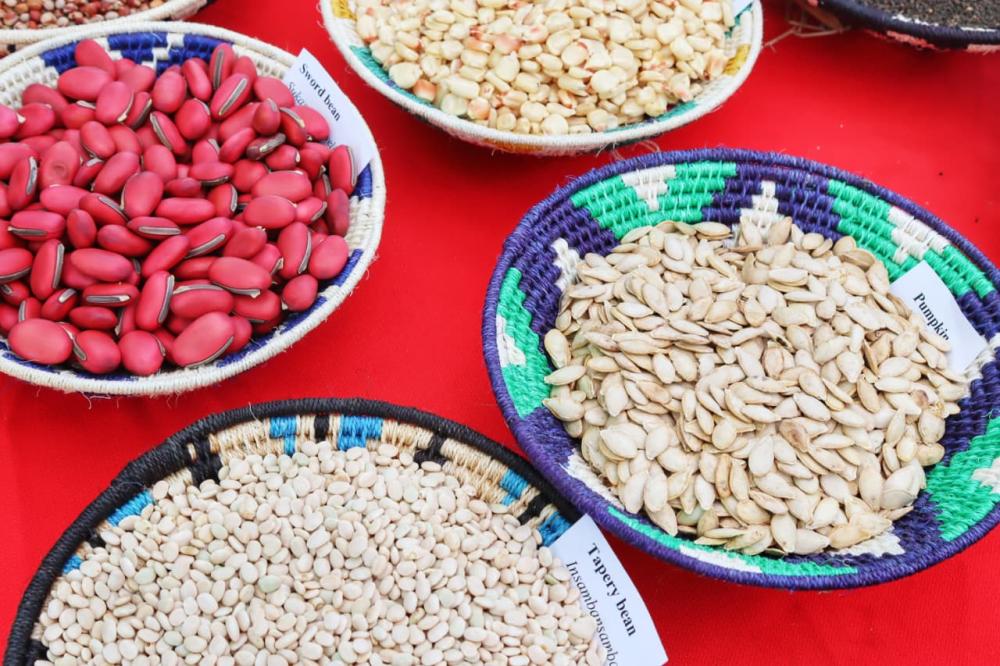
In the Lubombo Transfrontier Conservation Area (TFCA), which spans Eswatini, Mozambique and South Africa, farmers on both sides of the border are building farmer-managed seed systems rooted in agroecology. In Eswatini, three farmer-run Community Seed Banks (CSBs) in Shewula, Tikhuba, and Langa are helping to revive indigenous crops that are steadily disappearing from local fields. These seed banks conserve, multiply, and market indigenous varieties of sorghum, cowpea, and traditional African vegetables, safeguarding both agricultural biodiversity and local food traditions. Just across the border, in Goba (Namaacha District, Mozambique), which shares the Lubombo Conservancy–Goba TFCA with Shewula, Ntava Yedzu brings together 12 farmers, 9 of them women, who conserve and multiply indigenous crop varieties.
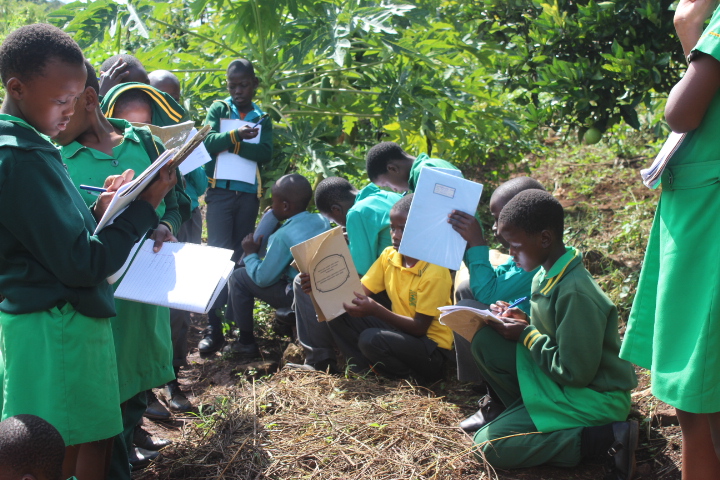
The CSBs are the result of more than a decade of agroecology work led by COSPE and strengthened through the German-supported via GIZ Transfrontier Adaptation Initiative in Lubombo (TRAIL), which worked across Eswatini, Mozambique and South Africa and concluded in April 2026. Today, the three Eswatini seed banks count 59 active members; 45 members, including 43 women, have reported increased incomes over the past four agricultural seasons. At the same time, agroecology demonstration plots have trained 25 Lead Farmers who now serve as mentors and resource persons within their communities.
Since TRAIL's closure, the seed banks have increasingly connected with national seed-sector institutions. The National Plant Genetic Resource Centre (NPGRC) in Eswatini is supporting committees to improve seed multiplication, storage, and record-keeping practices, while Seed Quality Control Services (SQCS) is guiding farmers through the Quality Declared Seeds (QDS) certification process. These partnerships are helping bridge the gap between community-led initiatives and formal seed systems. In Mozambique, the Goba group is connected with the Instituto de Investigação Agrária de Moçambique (Agricultural Research Institute of Mozambique) to conduct participatory variety evaluations of indigenous crop varieties and to build a CSB.
A community seed bank that relies solely on donor funding cannot thrive long term. Recognising this, each CSB has developed a business plan designed to diversify income generation. Beyond seed sales, members are exploring opportunities in grain production, processed foods, honey, and learning exchanges for visitors interested in agroecology. In Goba, where COSPE's earlier work supported ecotourism and local products, the Ntava Yedzu farmers are exploring agroecotourism, linking their agroecology work with hiking and hospitality.
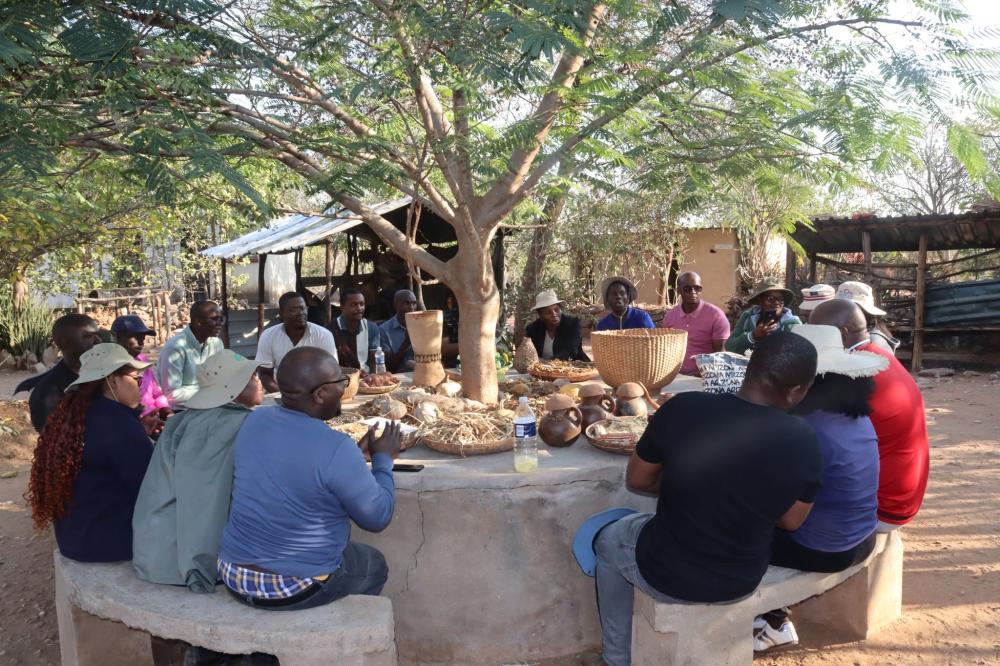
Lead Farmers and agricultural extension officers at Shashe Agroecology School
In July 2026, Lubombo Lead Farmers, Ministry of Agriculture officers, and representatives from COSPE and PELUM took part in learning exchanges with the Mopani Farmers' Association in South Africa and the Shashe Agroecology School in Zimbabwe. These visits reinforced key lessons on sustainability, member ownership, and institutional growth. Participants observed that strong member contributions support organisational independence, that decentralised governance structures can scale successfully across large territories, and that training and exchange visits can generate additional revenue. The experience confirmed that Lubombo farmers in Eswatini possess strong technical skills, while the next challenge is to strengthen governance, expand partnerships, and improve access to finance.
Since TRAIL's closure, the seed banks have increasingly connected with national seed-sector institutions. The National Plant Genetic Resource Centre (NPGRC) in Eswatini is supporting committees to improve seed multiplication, storage, and record-keeping practices, while Seed Quality Control Services (SQCS) is guiding farmers through the Quality Declared Seeds (QDS) certification process. These partnerships are helping bridge the gap between community-led initiatives and formal seed systems. In Mozambique, the Goba group is connected with the Instituto de Investigação Agrária de Moçambique (Agricultural Research Institute of Mozambique) to conduct participatory variety evaluations of indigenous crop varieties and to build a CSB.
A community seed bank that relies solely on donor funding cannot thrive long term. Recognising this, each CSB has developed a business plan designed to diversify income generation. Beyond seed sales, members are exploring opportunities in grain production, processed foods, honey, and learning exchanges for visitors interested in agroecology. In Goba, where COSPE's earlier work supported ecotourism and local products, the Ntava Yedzu farmers are exploring agroecotourism, linking their agroecology work with hiking and hospitality.
LACE: a network, not a building
The next phase of this journey in Eswatini is the proposed Lubombo Agroecology Centre of Excellence (LACE), a farmer-led network dedicated to agroecology training, research, innovation, and seed systems development. Supported by the Sahee Foundation (www.sahee.org), COSPE is currently finalising a feasibility study to assess the initiative's potential. If the results are positive, pilot implementation could begin in 2027.
Lead Farmers and agricultural extension officers at Shashe Agroecology School
In July 2026, Lubombo Lead Farmers, Ministry of Agriculture officers, and representatives from COSPE and PELUM took part in learning exchanges with the Mopani Farmers' Association in South Africa and the Shashe Agroecology School in Zimbabwe. These visits reinforced key lessons on sustainability, member ownership, and institutional growth. Participants observed that strong member contributions support organisational independence, that decentralised governance structures can scale successfully across large territories, and that training and exchange visits can generate additional revenue. The experience confirmed that Lubombo farmers in Eswatini possess strong technical skills, while the next challenge is to strengthen governance, expand partnerships, and improve access to finance.
Policy catches up
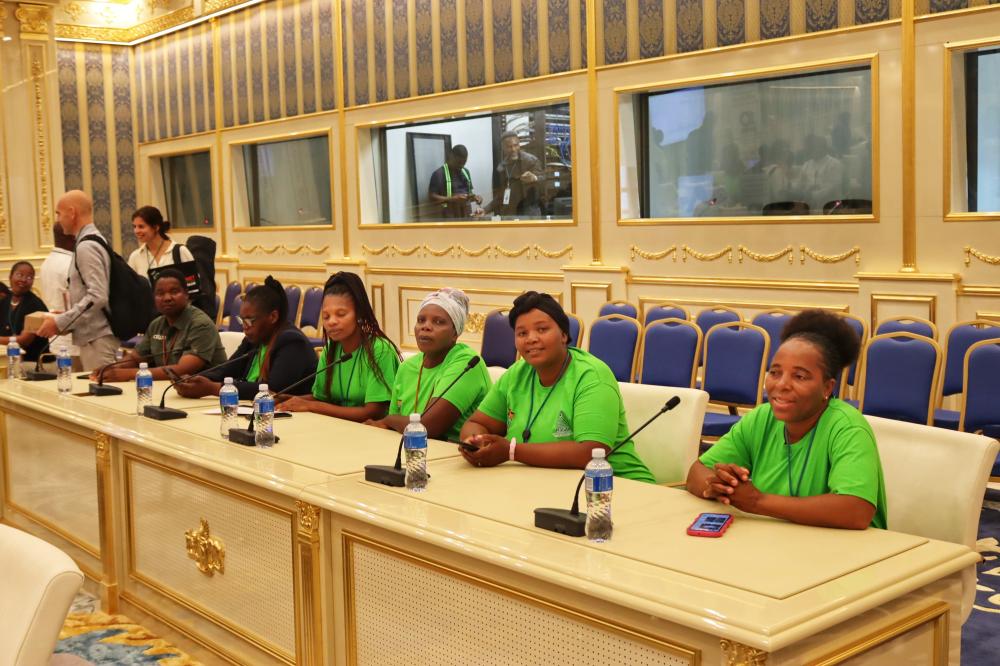
At the national and continental levels, the policy environment is increasingly supportive of agroecological transition. COSPE has contributed to developing Eswatini's National Agroecology Strategy, while the First African Union Seed Summit, held in Eswatini in October 2026, launched the AU Farmer-Managed Seed Systems Policy Framework, expected to be adopted in 2027. During the summit, CSB representatives from Eswatini showcased their seeds and called for greater recognition and protection of farmer-managed seed systems. At the regional level, SADC's harmonised seed regulations bridge national and continental frameworks and could ease the cross-border movement of farmer-produced seed within the TFCA.
What comes next
Looking ahead, COSPE and its partners will continue to support the seed banks in implementing their business plans, advancing the QDS certification process, completing the LACE feasibility study, and strengthening seed exchange and joint learning between farmers in Eswatini and Goba. Ultimately, success will be measured not by the number of seed banks established, but by the creation of resilient, farmer-owned seed systems across the Lubombo TFCA that can thrive long after individual projects end.
For more information contact: Mhlonishwa Mick Mabuza on mhlonishwa.mabuza@cospe.ngo